The best time to visit the San Antonio missions
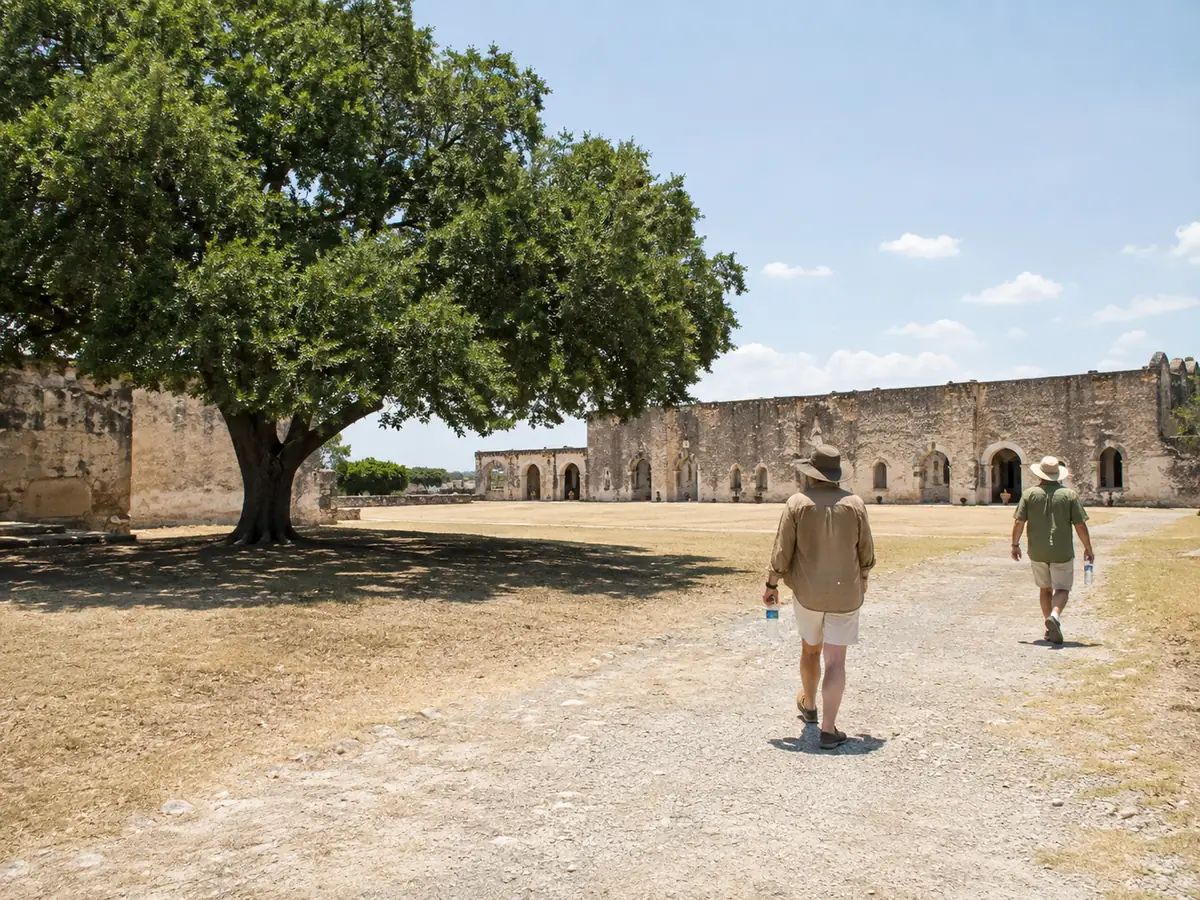
The park’s own heat alert, in full
Most park weather advice is generic. This is not, and it is worth reading exactly as the park writes it rather than paraphrased into blandness.
From the park’s live alert
“Don’t Let Heat be What Ruins Your Trip. Hike or bike before 11am. Wear sunscreen, sunglasses, and a hat. Drink plenty of water. Eat salty snacks. Rest in the shade.”
Six instructions, one of which is a scheduling instruction. “Hike or bike before 11am” is not advice about clothing, it is advice about what time to get up, and it is the only line on this page that will change your itinerary rather than your packing.
The numbers behind it
Mean daily maximum temperature by month. These agree within a degree or two across NOAA’s 1991–2020 normals and two independent presentations of them.
| Month | Average daily high | This site’s read |
|---|---|---|
| January | 63°F | Cool and quiet. About 21 days a year drop to 32°F or below, spread across the winter |
| February | 68°F | Still cool. Grounds close early — sunset, not 5pm |
| March | 74°F | The window opens. Comfortable all day |
| April | 80°F | The best of it. Warm without the arithmetic |
| May | 87°F | The last month you can start at eleven and be fine |
| June | 92°F | Early start territory. The alert applies |
| July | 95°F | Before 11am or not at all, on the trail |
| August | 96°F | The hottest month on the record |
| September | 90°F | Still summer. The 111°F record was set on 5 September 2000 |
| October | 82°F | The window reopens. As good as April |
| November | 72°F | Comfortable and unhurried. Short days, though |
| December | 65°F | Cool. Closed on Christmas Day |
Two figures from the Park Service put that table in context. The temperature reaches 90°F or above on an average of 116 days a year — that is nearly a third of the calendar — and drops to 32°F or below on about 21 days. The record high is 111°F, set on 5 September 2000, which is twenty-one degrees above September’s own average and a reminder that a monthly mean is not a forecast.
Which months this site would pick, and whose opinion that is
March and April, or October and November. Highs of 72 to 82°F, which is walking-round weather for a whole day rather than a morning, on a site where the walking round is the entire activity.
That recommendation is this site reasoning from published temperature normals. It is not the Park Service’s advice, it is not Visit San Antonio’s, and no primary source names a best month at all. Anyone telling you the official best time to visit is telling you their own preference in a borrowed voice. Ours is above, with the table it came from, so you can disagree with the reasoning rather than the conclusion.
The case against summer is not that it is unpleasant, it is that it shrinks the usable day. In June through September the comfortable hours run from sunrise to about eleven, which happens to be exactly when the ranger programmes run — three at 10:00 am and one more at 11:00. A July visit is therefore a genuinely good early morning followed by a decision about the afternoon. The case against December through February is milder and mostly about daylight: the grounds close at sunset, not at 5 p.m., which the hours page takes apart.
Humidity, which nobody plans for
The Park Service publishes it and the shape is awkward. Humidity “averages about 80% in the early morning” and “drops to about 50% in the late afternoon”. So the coolest part of the day is also the most humid part of it, and the driest air arrives at the hottest hour.
That does not change the advice — the temperature swing between morning and afternoon is far larger than the comfort penalty from morning humidity, so early still wins. It is here because an 80% figure is a surprise to people who expect Texas to mean dry heat, and being surprised at 8 a.m. with a day’s walking ahead of you is worse than being told now.
Time of day beats time of year
If you cannot choose the month, choose the hour. The grounds open at sunrise, which in high summer is a long way before the buildings open at 9 and a very long way before the heat becomes the subject. The ranger walks are at 10 and 11. The one afternoon programme in the park — the 3:00 pm looming demonstration at Mission Espada — happens inside the museum, which on a 96°F day is a convenience the schedule probably did not intend. That last observation is ours, not the park’s.
Water is free and everywhere: filling stations at all four mission sites and in the visitor centre. On a day the park itself describes in terms of salty snacks and shade, that is not a footnote.
What this page will not tell you about shade
The Park Service says “not much of the Hike & Bike Trail is shaded”. That statement is about the trail and this site keeps it there. No official source says anything about how much shade there is on the mission grounds themselves, so nothing about that appears here. If you are riding, assume sun for most of the route and plan the water accordingly — the trail page has the distances and the docking rhythm.
The rest of the calendar
The park closes on exactly three days a year: Thanksgiving, Christmas and New Year’s Day. There are no ranger-led programmes on the first Wednesday of any month, in any season. And no seasonal variation in the 9-to-5 is published, so a February Tuesday and a July Tuesday are the same opening hours with wildly different weather.
The month people should worry about is not August, it is whichever one they have already booked. If that is July, you have not made a mistake — you have made an early start compulsory. Be at Mission Concepción when the light comes up, take the 10 o’clock walk, be at Mission San José for the film in air conditioning by noon, and treat the afternoon as optional. That is a very good day. It is just not a day you can start at eleven.
The weather changes what a visit feels like and nothing about what it costs: entry, parking, the ranger walks and the film are free year round. The Park Service pages behind the hours, the fees and the church information all still carry a last-updated date of 5 May 2025. That is not a scandal, it is a website — but they are the pages this site leans on hardest, so look at nps.gov/saan before you set off rather than after.
Frequently asked questions
What is the best time of year to visit the San Antonio missions?
No official source names a best month. Reading the temperature normals, this site would choose March to April or October to November, when mean daily highs run 72 to 82°F. That is our reasoning rather than a Park Service recommendation.
How hot does it get at the San Antonio missions?
July averages about 95°F and August about 96°F as mean daily maximums. The Park Service says the temperature reaches 90°F or above on an average of 116 days a year. The record high is 111°F, set on 5 September 2000.
What time of day should you visit the missions in summer?
Early. The park’s own heat alert says “hike or bike before 11am”, and the grounds are open from sunrise, which in summer is well before the 9 a.m. facility opening. Three of the four ranger programmes run at 10:00 am, so an early start and the guided walks fit together.
Is it too hot to visit the San Antonio missions in July?
Not if you start early. The comfortable hours in July run from sunrise to about eleven, which is when the ranger walks happen anyway. Water refill stations are free at all four missions and in the visitor centre, and the one afternoon programme, the 3:00 pm looming demonstration at Mission Espada, is indoors.
When is it coolest at the San Antonio missions?
January and December, with mean daily highs of 63 and 65°F, and about 21 days a year when the temperature drops to 32°F or below. The trade-off is daylight: the grounds close at sunset rather than at 5 p.m.